


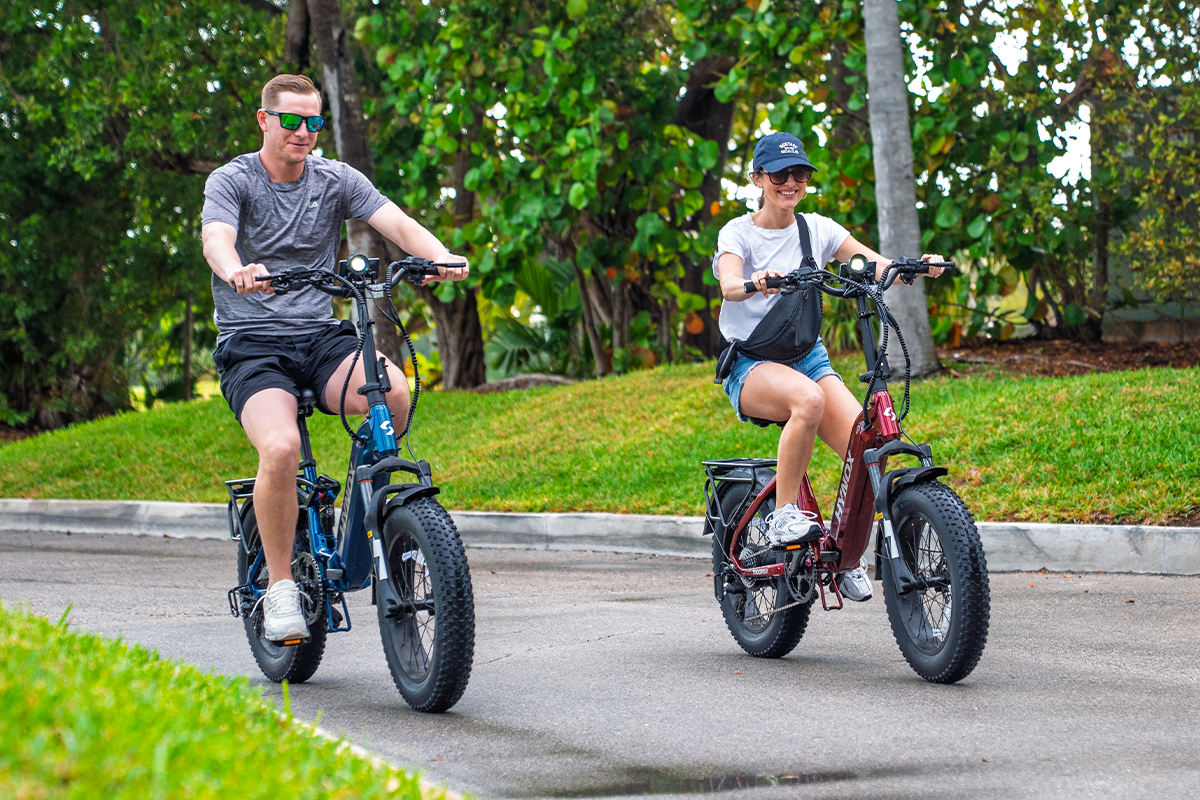
More people are discovering the freedom of eBikes—and it's easy to see why. Whether it's a smoother commute, a weekend adventure, a quick trip around town, or simply a more enjoyable way to get outside, an electric bike can change the way you experience everyday rides. With a little extra assistance when you need it, hills feel easier, distances feel shorter, and every ride becomes more accessible.
But with so many eBike options available today, choosing your first eBike can feel overwhelming. From motor power and battery range to sensors, frame design, tires, and comfort features, every detail can affect how an eBike performs and feels. That's why we put together this guide—to help you understand what really matters and find the ride that fits your lifestyle.
1. Riding Needs and Use Cases
City & Urban Riding
Best for: Daily commuters, city riders, and casual explorers
If most of your rides are around town, convenience matters. A bike that’s easy to store, comfortable for daily use, and ready whenever you need it can make every trip feel simpler. The Flex is built for that lifestyle with a quick fold design, up to 70 miles of range, and an integrated rear rack.
Mixed Terrain Riding
Best for: Riders who want one bike for roads and beyond
From city streets to bike paths and gravel roads, mixed-terrain rides call for a balance of power, comfort, and confidence. The Trooper delivers that all-around performance with 20" x 4.0 fat tires, a torque sensor, and 1400W peak power for daily rides and weekend adventures.
Off-Road Adventure
Best for: Trail riders, outdoor enthusiasts, and adventure seekers
Off-road riding brings steeper climbs, rougher trails, and more unpredictable terrain. In these conditions, extra power, traction, and suspension can make a big difference in comfort and control. The Trooper X is designed for riders who want more capability beyond the pavement, delivering 100 Nm of torque and 1600W of peak power. For superior handling, it features a pro-grade full suspension system equipped with an EXSHO 80mm front fork and a DNM 35mm air shock, cleverly integrated into a Horst-Link structure to provide 80mm of rear wheel travel for exceptionally confident trail riding.
2. Motor Type and Power Levels
An eBike's motor performance comes down to more than just one number. Motor type, power output, and torque all work together to influence acceleration, climbing ability, and overall ride feel.
Motor Types
Most eBikes use one of two motor systems:
Hub Motors
- Affordable, reliable, and low-maintenance.
- Great for everyday riding and found on many modern commuter, fat tire, and adventure eBikes.
Mid-Drive Motors
- Better weight distribution and climbing efficiency.
- Often found on premium mountain eBikes, but typically come at a higher price.
Understanding Motor Power (Watts)
Motor power is measured in watts (W), which represents the work a motor can perform per unit of time. Generally speaking, a higher wattage means greater raw power capability.
However, power is only half the equation—torque (measured in Nm) is what actually drives performance. In simple terms, torque determines a motor's ability to overcome resistance: the higher the torque, the stronger the pull.
Common eBike power levels include:
- 250W: Lightweight and efficient, ideal for casual rides and flatter routes.
- 500W: A balanced option for everyday riding with extra support for hills and longer distances.
- 750W: A popular choice for riders who want more acceleration, climbing capability, and versatility across different riding conditions.
-
Over 750W: Motors with a continuous rating above 750W are generally classified outside standard eBike regulations in most regions and are typically illegal or not allowed on public roads or bike lanes.
While standard 750W e-bike motors on the market typically output 50–70 Nm of torque, Hynox's proprietary 750W motor delivers a massive 100 Nm of peak torque. This extra torque translates directly into vastly superior hill-climbing power and heavy-duty payload capacity when you need it most.
3. Pedal Sensors: Torque Sensor vs. Cadence Sensor
Motor wattage tells you how strong the eBike is, but the pedal sensors determine how that power actually translates to the road. By measuring your pedaling input, the sensor dictates how the motor responds to you, completely transforming your overall riding experience.
Torque Sensor
- How it works: Measures how hard you are pedaling and instantly matches your effort.
- Ride feel: Smooth, natural, and responsive acceleration that matches your effort.
- Best for: Commuting, hills, mixed terrain, and riders who want a more intuitive ride.
- Keep in mind: Typically found on premium eBikes and comes at a higher price point.
Cadence Sensor
- How it works: Detects if you are pedaling and triggers a set amount of motor assist.
- Ride feel: Strong, consistent acceleration with minimal rider input.
- Best for: Casual riding, cruising, and value-focused eBikes.
- Keep in mind: Power delivery can feel more abrupt and less responsive to changes in pedaling effort.
To deliver the best of both worlds, Hynox eBikes are equipped with high-precision torque sensors paired seamlessly with our high-torque motors. This advanced system provides an exceptional pedaling experience—giving you the authentic, natural handling of a traditional bicycle, perfectly blended with the effortless power and thrill of an electric bike.
4. Battery Range
Battery range is one of the biggest factors when choosing an eBike, but your actual range depends on more than just the number on the spec sheet.
Common factors that affect range include:
- Terrain: Hills and rough trails use more battery than flat roads.
- Pedal Assist Level: Higher assist levels consume more power.
- Rider & Cargo Weight: More weight requires more motor support.
- Weather & Tire Pressure: Cold temperatures, headwinds, and underinflated tires can all reduce range.
- Motor Efficiency & Controller Tech: Advanced motor controllers waste less energy, smoothly squeezing more miles out of the same battery capacity.
Most eBikes max out between 20–60 miles per charge. Thanks to Hynox's custom-tuned proprietary controllers—which offer significantly higher motor efficiency than generic off-the-shelf systems—we push past the average. The Flex delivers up to 70 miles for urban commutes, while the Trooper and Trooper X provide up to 65 miles of capable, all-terrain adventure.
5. Weight and Portability
An eBike's weight can make a big difference in everyday use. If you'll be lifting your bike onto a bike rack, carrying it up stairs, or moving it around regularly, be sure to consider how much it weighs before you buy.
If portability is a priority, a folding eBike is worth considering. Folding frames make storage and transportation much easier, especially for apartment living, RV travel, or fitting your bike into a car trunk. Adjustable handlebars and seat posts also make it easier to fit different riders.
All Hynox eBikes feature folding frames designed for easier storage and transportation, making them a practical choice for commuters, apartment dwellers, RV travelers, and anyone looking to save space without compromising ride performance.
6. Brakes, Suspension, and Ride Comfort
Stopping power matters, especially as eBikes become faster and heavier. Common braking systems include:
- Mechanical disc brakes: Affordable and reliable.
- Hydraulic disc brakes: Smoother control, stronger stopping power, and less hand fatigue.
Suspension helps absorb bumps, reduce vibration, and improve comfort across different surfaces. Front suspension is a practical choice for everyday riding, while full suspension adds extra comfort and control for rougher terrain.
Across the lineup, Hynox eBikes feature LOGAN hydraulic disc brakes with heavy-duty 180mm x 2.3mm rotors and an EXSHO 80mm hydraulic front fork. For maximum capability, the Trooper X adds a DNM 35mm air shock and a four-bar Horst-link structure, delivering unmatched comfort and control on any terrain.
7. Essential Components
When comparing eBikes, it's easy to focus on the motor and battery, but the smaller details can have a big impact on your daily ride—the lights, storage options, and comfort features you'll use again and again.
- Headlights & Taillights: For visibility and added safety at night.
- Fenders: To help keep you cleaner.
- Rear Racks: For bags, groceries, or cargo.
- Smart Displays: For ride data and quick controls.
- Saddles: For a more comfortable fit.
Every Hynox eBike comes equipped with the essentials, plus premium features that are often reserved for higher-end models or optional upgrades—including full-color displays, a 130 Lux dual-beam (high and low beam) front light, and 8.6" ergonomic memory foam saddles.
8. Ebike Classes Ratings
Understanding eBike classes is essential before buying an eBike. Your bike's class can affect where you're allowed to ride and which regulations apply.
The three common eBike classes are:
- Class 1 – Pedal assist only, with a maximum assisted speed of 20 mph.
- Class 2 – Pedal assist and throttle, with a maximum assisted speed of 20 mph.
- Class 3 – Pedal assist only, with a maximum assisted speed of 28 mph.
Out of the box, Hynox eBikes ship as fully compliant Class 2 models, capped at a top assisted speed of 20 mph. Where local regulations allow, riders can easily unlock speeds of up to 28 mph using the official Hynox app, upgrading their ride to Class 3 capability.
9. Know the Rules of the Road
Ebike laws aren't the same everywhere. Depending on where you live, regulations may vary by state, city, or even individual bike trails.
Before you ride, it's worth checking:
- Where you can ride: Bike lanes, roads, shared paths, or trails.
- Helmet requirements: Rules may vary by rider age and eBike class.
- Age restrictions: Some areas have minimum age requirements for certain eBike classes.
- Speed and throttle regulations: Local laws may limit assisted speed or throttle use.
Taking a few minutes to check your local regulations can help you ride legally and avoid unnecessary fines. Above all else, regardless of what local laws require, we strongly recommend wearing a properly fitted helmet every single time you ride.
10. Warranty & Support: What to Look For
Buying an eBike is a long-term investment. Beyond the bike itself, consider the warranty, trial period, payment options, and support that can make ownership easier and more worry-free.
Before you buy, you may want to ask:
"How long will I be covered after my purchase?"
The best brands stand behind your ride beyond the first day.
"What if I change my mind after my first few rides?"
The right choice shouldn't feel like a gamble.
"What if I find a better price after ordering?"
Feel confident about your decision, even after checkout.
"How quickly can I get help when I need it?"
Responsive support keeps small issues from becoming big frustrations.
"Are there flexible ways to pay?"
A great ride should fit your lifestyle and budget.
At Hynox, we're committed to making ownership simple from day one with a 2-year warranty, 30-day trial, price match guarantee, flexible financing, and dedicated rider support.
Ready to find your ride? Explore the latest Hynox eBike Sale, or reach out to our team if you need help choosing the right model.
Share:
Torque Sensor vs. Cadence Sensor: Which Pedal Assist is Right for You?