


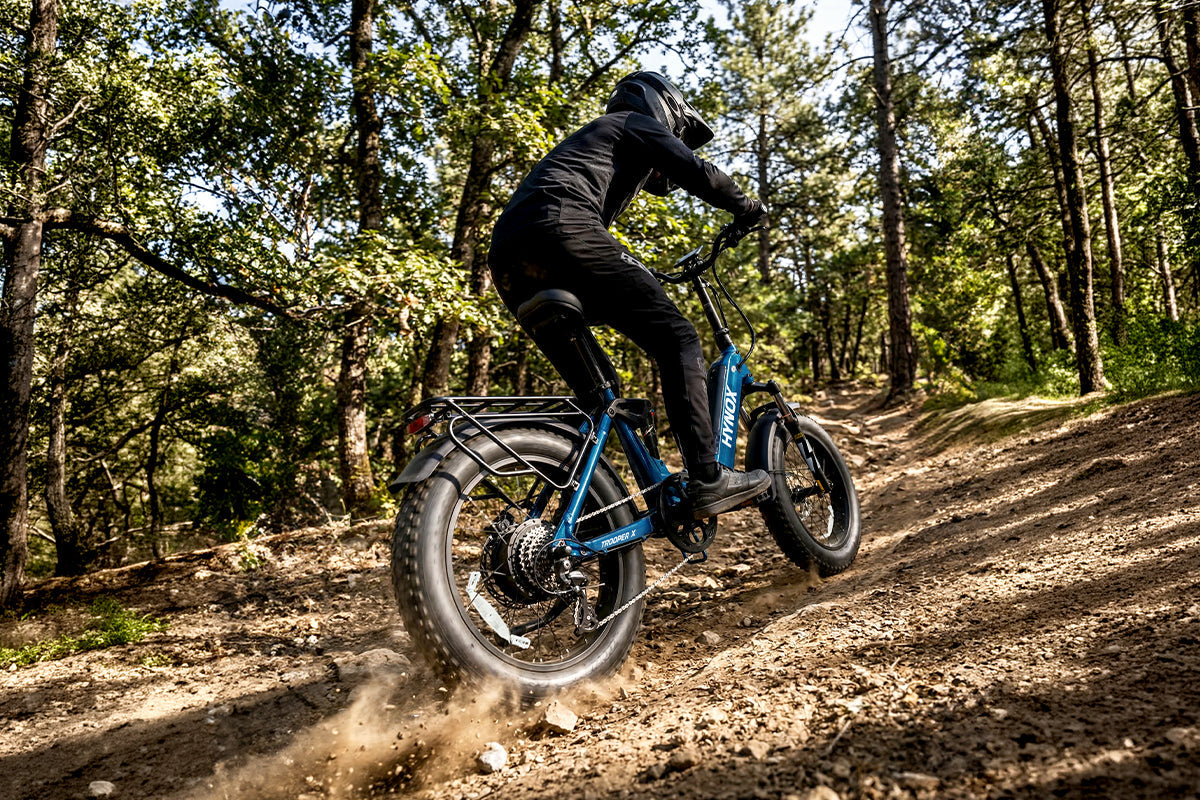
Choosing an e-bike for hills takes more than comparing motor wattage. Torque, power delivery, battery capacity, gearing, traction, and rider input all affect how an e-bike performs when the road goes uphill.
Two e-bikes with similar motor power can feel very different on the same hill. The difference comes from how the entire system works together—and how well that system matches the terrain you ride.
This guide breaks down the key features that affect hill climbing, the riding conditions that increase the demand, and the techniques that can help you get more from your e-bike uphill.
What Makes an E-Bike Good for Hills?
A capable hill-climbing e-bike is more than a big number on a spec sheet. Some features directly affect climbing force, while others help deliver, sustain, and control that power.
1. Motor Torque: The Force Behind the Climb
Measured in Newton-meters (Nm), torque describes the rotational force produced by the motor. More available torque can help an e-bike accelerate and maintain movement at lower speeds, especially on steep grades or with heavier loads.
For riders who regularly tackle hills, torque is one of the first specifications worth checking.
2. Motor Power & Sustained Performance: More Than a Wattage Number
Wattage gives you an idea of the motor's power output, but it doesn't tell you exactly how that power will feel on a climb.
A steep hill can demand strong output for a short burst, while a long ascent requires the motor to keep delivering useful power over time. Peak watts matter, but sustained performance and how the system delivers that power matter too.
3. Torque Sensors & Power Delivery: Assistance That Responds
A torque sensor measures how hard you are pushing the pedals and adjusts motor assistance accordingly.
On a climb, your effort can change constantly as the grade changes. A torque-sensing system can respond to those changes more proportionally than a basic cadence-sensing system, creating a more connected and predictable feel.
For riders who frequently climb hills, that responsive assistance can be especially useful when riding at lower speeds or starting again on an incline.
4. Battery Capacity: More Energy for Longer Climbs
Hills and repeated climbs use more energy than flat riding. Battery capacity, measured in watt-hours (Wh), gives you a useful indication of how much stored energy is available.
A larger battery won't make a motor more powerful, but it can give you more energy for long, repeated, or hill-heavy rides. Actual range still depends on terrain, rider weight, speed, assist level, and other conditions.
5. Gearing: Let the Rider and Motor Work Together
Lower gears make it easier to maintain a manageable pedaling cadence as a climb gets steeper.
That matters because your legs are still part of the system. A useful range of gears lets you contribute more efficiently instead of grinding against a hard gear while the motor does all the work.
6. Tires & Traction: Putting Power to the Ground
Motor output is only useful if the tires can transfer it to the surface.
On smooth pavement, traction is relatively predictable. Gravel, dirt, wet roads, and loose terrain are different. Tire width, tread, pressure, and surface conditions can determine how much of the available motor force actually becomes forward movement.
7. Weight, Suspension & Brakes: The Supporting Factors
These features don't create climbing power, but they still affect how the bike handles hills.
More total weight means more mass to move uphill. Suspension can improve control over rough terrain, while reliable brakes become increasingly important on steep or prolonged descents.
Think of them as part of the complete hill-riding setup rather than primary sources of climbing power.
External Factors That Affect E-Bike Hill Climbing
The bike's specifications are only part of the equation. The same e-bike can face very different demands depending on the climb, the load, and the surface.
-
Steepness & Climb Length: Short, steep climbs demand more climbing force, while long or repeated climbs put more emphasis on sustained motor performance and battery capacity.
-
Rider & Cargo Weight: The more total weight the e-bike moves uphill, the more force and energy it needs. For heavier loads, higher torque and sufficient battery capacity become more valuable.
-
Surface & Traction: Gravel, dirt, wet roads, and loose terrain make it harder to transfer motor power to the ground. Tire grip and controlled power delivery become especially important when traction is limited.
-
Stops, Starts & Low-Speed Climbing: Restarting on a steep incline demands more from the motor than maintaining momentum. Low-speed torque, responsive assistance, and suitable gearing can make those restarts much easier.
And the bike isn't the only part of the equation. How you ride can also make a noticeable difference on a climb.
Hill-Climbing Tips for a Better Ride
The right e-bike helps, but riding technique still matters. These simple tips can make steep climbs smoother and easier.
-
Shift to a lower gear before the climb gets steep. A lower gear helps you maintain a steady cadence and keep pedaling comfortably as the grade increases.
-
Increase pedal assist before you lose speed. Add assistance as the climb begins rather than waiting until you're already struggling to maintain momentum.
-
Keep a steady pedaling rhythm. Most e-bikes use a torque sensor or cadence sensor for pedal assistance. Torque sensors respond to how hard you pedal, while cadence sensors respond primarily to pedal rotation. A steady rhythm helps maintain consistent assistance as you climb.
-
Carry steady momentum into the climb. When conditions allow, approach the hill at a controlled speed instead of trying to regain momentum after you've already slowed down.
-
Use smooth inputs on loose surfaces. Abrupt throttle or pedal inputs can make the rear wheel spin when traction is limited, so smooth, controlled power is especially useful on gravel, dirt, or wet terrain.
-
Adjust suspension to the terrain. Use a firmer setting for smoother climbs and a more active setting when the climb gets rough or loose to help maintain traction and control.
Best E-Bikes for Hills: Hynox Picks for Real Climbs
The best e-bike for hills depends on how demanding your rides are. Hynox offers different levels of climbing capability, so the right choice comes down to the terrain, load, and type of riding you have in mind.
Trooper X — Best for Steep Climbs & Demanding Terrain
If steep grades, long climbs, mixed terrain, or heavier loads are a regular part of your riding, the Trooper X is the strongest hill-climbing option in the Hynox lineup. Its 100Nm of torque, up to 1,600W peak power, 720Wh battery, torque sensor, 20×4.0-inch tires, and full suspension give it the hardware to tackle demanding climbs. Hynox’s custom-tuned motor control also helps shape how that power is delivered, with assistance responding to rider input as the terrain changes.
That combination matters when a climb gets steep or the surface gets rough. The high-torque motor provides climbing force, the torque sensor responds to your effort, while the wide tires and full suspension help maintain traction and control when the route leaves smooth pavement.
And the climbing capability isn't just on paper. In Electric Bike Review's Black Hill test, the Trooper X finished near the top of the folding e-bikes they had tested, even when configured for Class 2. It completed the climb in 83 seconds on pedal and 85 seconds on throttle.
Trooper — Best for Hilly Commuting & Mixed Terrain
For riders who deal with regular hills but want one bike for commuting, everyday riding, and mixed terrain, the Trooper offers a strong balance of climbing capability and versatility. With 85Nm of torque, a 720Wh battery, torque sensing, 20×4.0-inch tires, and an 8-speed drivetrain, it is well equipped for hilly roads, gravel paths, and weekend rides.
Flex — Best Electric Commuter Bike for City Hills
For riders whose main use is commuting on paved streets with regular inclines, the Flex is the practical choice. With 75Nm of torque, a 624Wh battery, torque sensor, 20×3.0-inch tires, and an 8-speed drivetrain, it brings useful climbing capability into a lighter, more commuter-focused package.
Conclusion
If hills are part of your everyday ride, climbing performance deserves a place in your e-bike decision. Look beyond the motor number and consider how the bike's torque, power delivery, battery, gearing, traction, and overall setup match the climbs you actually ride.
Ready to experience the difference for yourself? Visit a Hynox dealer for a real-world test ride, or shop today's best ebike offers online and experience your e-bike with our 30-day free trial.
Share:
Hynox Trooper X: The Engineering Behind Our 100Nm Performance Flagship